
June 13, 2026 · Craft · Mentorship
How You Get to Carnegie Hall
There's the famous answer — practice, practice, practice. And then there's the part of the joke nobody tells you.

You know the old joke. A tourist is lost in midtown Manhattan, violin players everywhere, and he stops one of them on the sidewalk. "Excuse me — how do you get to Carnegie Hall?" The musician doesn't even break stride. "Practice, practice, practice."
Nobody knows who said it first. It's been pinned on half the great violinists of the last century and probably belongs to none of them. But the line stuck for a hundred years because it's true enough to feel like wisdom. You want to reach the big stage? Put in the reps. Simple.
Here's the part of the joke nobody tells you: it's incomplete. Reps alone won't get you to Carnegie Hall. Reps alone will get you very, very good at whatever you've been doing — including doing it wrong.
Practice makes permanent
Vince Lombardi used to correct his players when they leaned on the cliché. Practice doesn't make perfect, he'd tell them. Only perfect practice makes perfect. The rest just makes permanent.
That distinction is the whole game in our business, and the field teaches it to you whether you want the lesson or not. Picture two new advisors. Both are hungry. Both run two hundred appointments in their first year. The first one runs the same rushed, product-first meeting two hundred times — talking too much, pitching too early, never quite slowing down to listen. The second runs fewer meetings but treats each one like a rep that matters: records it, reviews it, finds the one thing that went sideways, and fixes it before the next.
A year later, advisor number one isn't two hundred meetings better. He's gotten exceptional at a mediocre meeting. He's carved a deep groove, and it's the wrong groove. Advisor number two is on her way to Carnegie Hall.
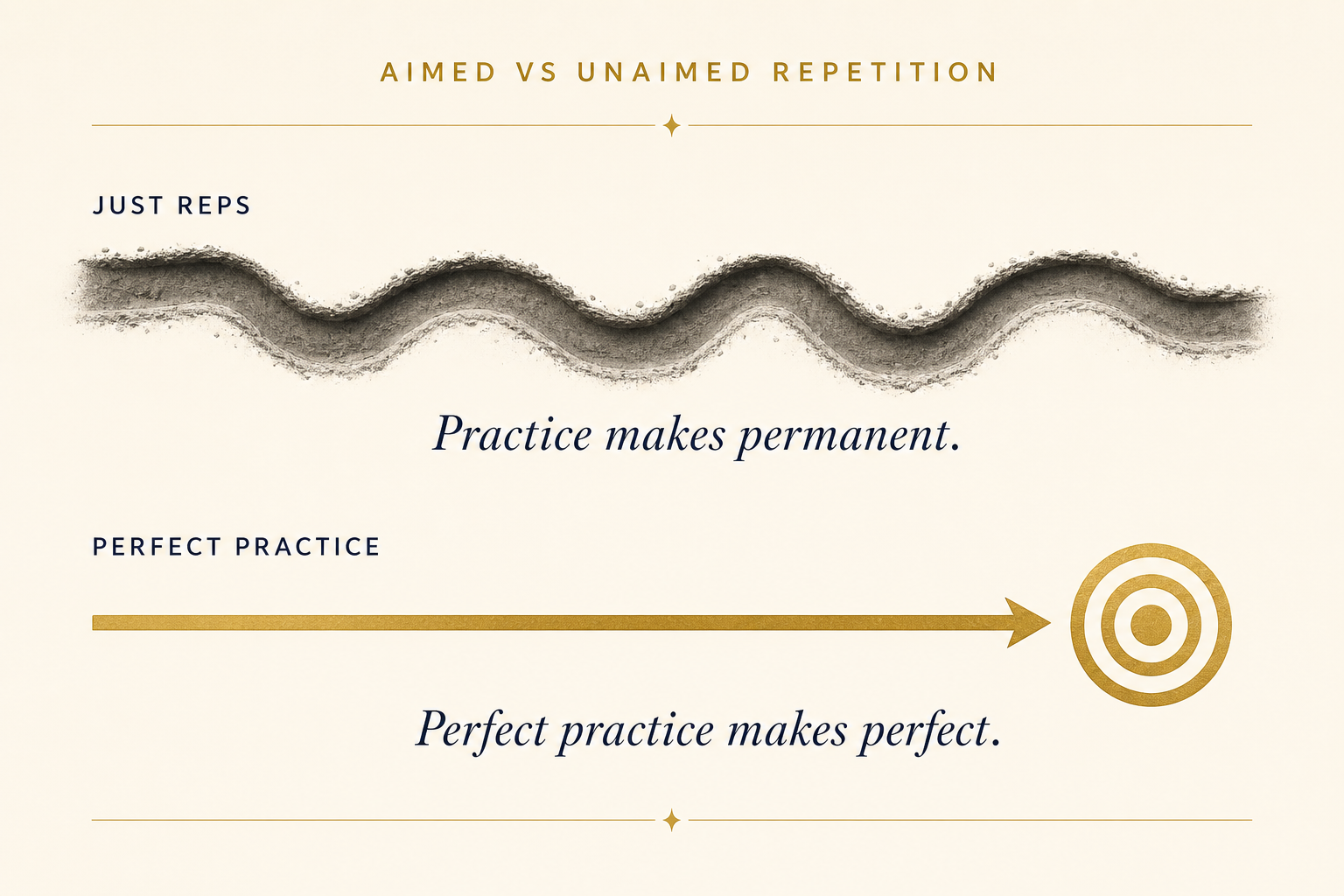
Same number of reps. The difference is whether each one is aimed.
Repetition doesn't move you toward the target. Aimed repetition does.
What "perfect practice" actually looks like
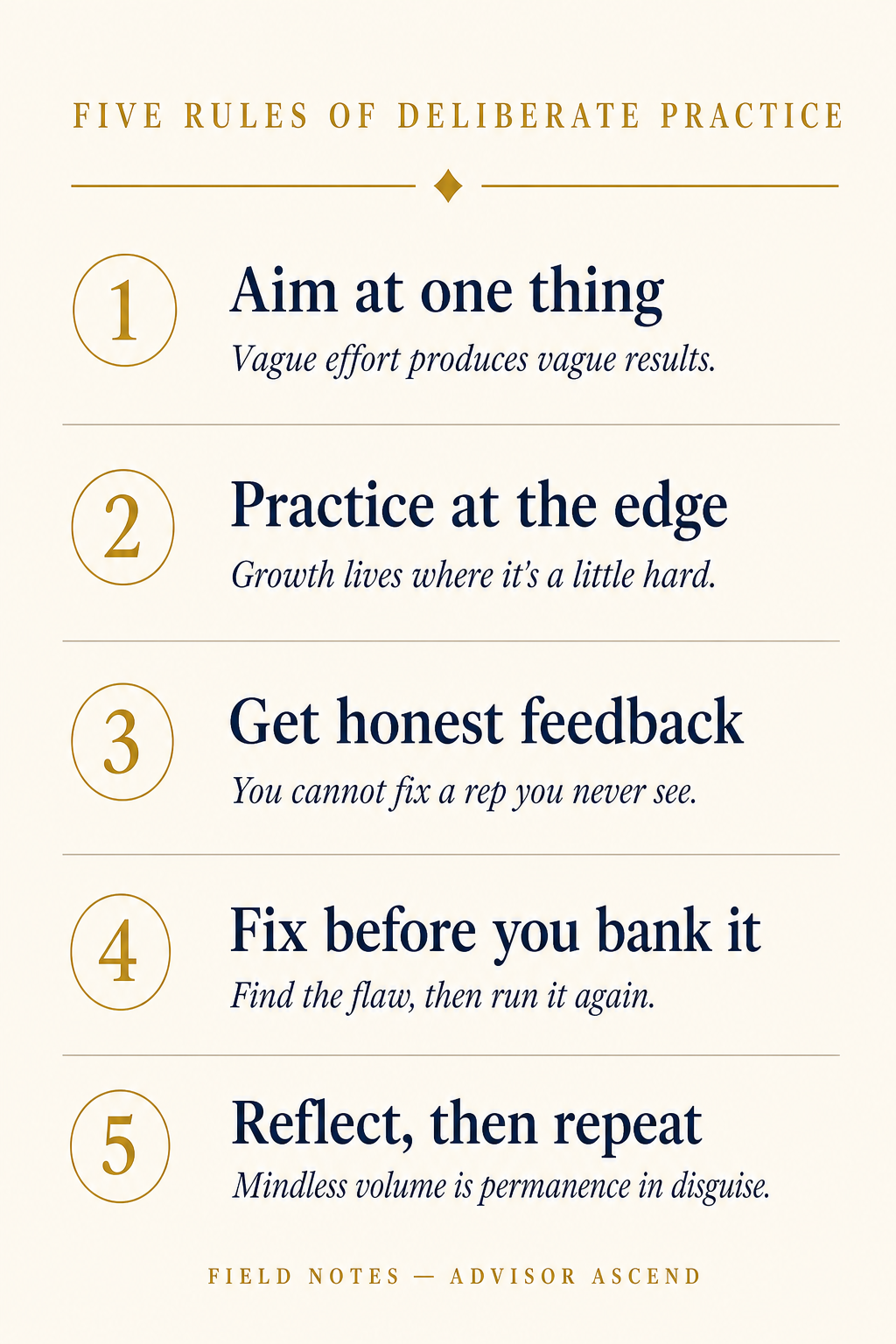
Researchers have a name for the second advisor's habit — deliberate practice. Strip away the academic language, and it comes down to a handful of things you can start doing this week. None of them require talent. All of them require honesty.
- Aim at one specific thing, not "get better at meetings." Pick one target: open so the client talks first, or land the fact-find without a single interruption. Vague effort produces vague results.
- Practice at the edge of your ability. If the rep is comfortable, you're rehearsing what you already own. Growth lives at the part that's a little hard — the objection you dread, the number you fumble.
- Get honest feedback, fast. Record yourself. Role-play with someone who'll tell you the truth. Bring a mentor into the room. You cannot fix a rep you never see.
- Fix the rep before you bank it. Don't run the same drill ten times and call it practice. Run it, find the flaw, correct it, then run it again. That's how the groove ends up in the right place.
- Reflect, then repeat. The reps that compound are the ones you think about afterward. What worked, what didn't, what you'll try next time. Mindless volume is just permanence in disguise.
Field Note — The cruel gift of this business is that the field grades you instantly and never lies. A prospect who goes quiet, a referral that never comes, a plan that gathers dust — that's your tape. Most advisors look away from it. The ones who climb study it like film.
The field is the teacher
You can rehearse in front of a mirror all you want, but the real practice room is the appointment itself — a living room, a kitchen table, a conference call with a worried family. That's where you find out what your script actually does when a real human being is sitting across from it.
That's why mentorship matters so much early on, and why the best advisors keep a coach long after they've "made it." Left to ourselves, we practice the parts we're already good at and quietly avoid the parts that sting. A mentor points you straight back at the sting — because that's the rep that's worth a hundred comfortable ones.
And remember what you're practicing for. The violinist is rehearsing for a stage. You're rehearsing for someone's retirement. Their income for thirty years. The legacy they leave the people they love. That is not a stage you want to walk onto under-rehearsed.
So how do you get to Carnegie Hall? The old joke was almost right. Not just practice. Perfect practice. Aimed, honest, uncomfortable, reviewed, and repeated — until the right thing becomes the automatic thing, and you can do it on the biggest stage there is without thinking about it at all.
Then you do it again. Because there's always another rung.